Company Overview
Canadian Metal Buildings is a structural steel manufacturer with more than 60 years of experience designing and producing pre engineered building systems.
Their projects span a wide range of applications, including:
- Industrial buildings
- Commercial structures
- Residential and agricultural buildings
- Building expansions and additions
With projects delivered across Canada and expanding into the United States, the company operates in a competitive environment where production efficiency and consistency are critical.
The Challenge: Manual Welding Bottlenecks
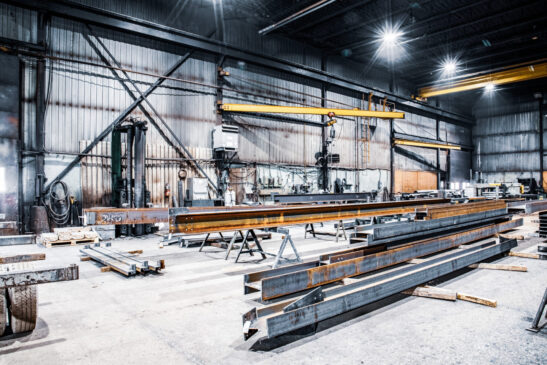
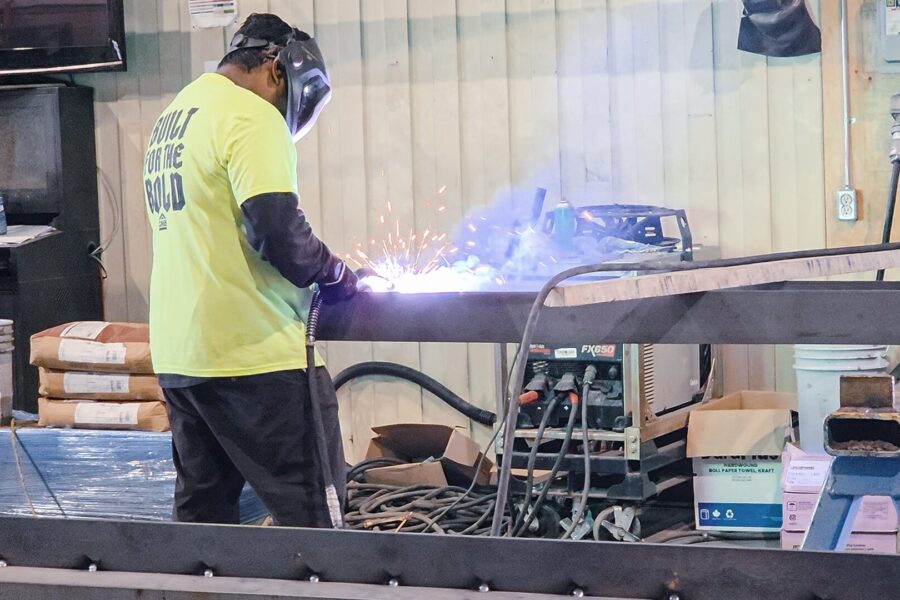
Like many steel fabrication shops, Canadian Metal Buildings relied heavily on manual welding processes. Over time, this created several operational challenges:
- A bottleneck between structural steel fitters and welders
- High dependence on skilled labor for repetitive welding tasks
- Production flow interruptions between workstations
According to Chief Operating Officer Lucas Bruzzese, much of the fabrication process required intensive manual work.
“One of the main challenges we faced was the amount of manual labor within our manufacturing. Many processes required hand operations for welding and fitting.”
As demand increased, these constraints made it harder to maintain consistent throughput. The company began exploring automation as a way to stabilize production while supporting their workforce.
The Solution: Robotic Welding Integration
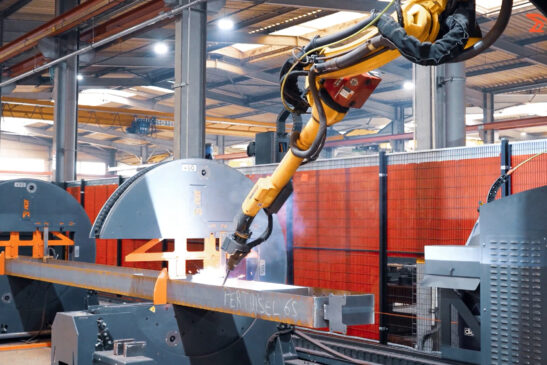
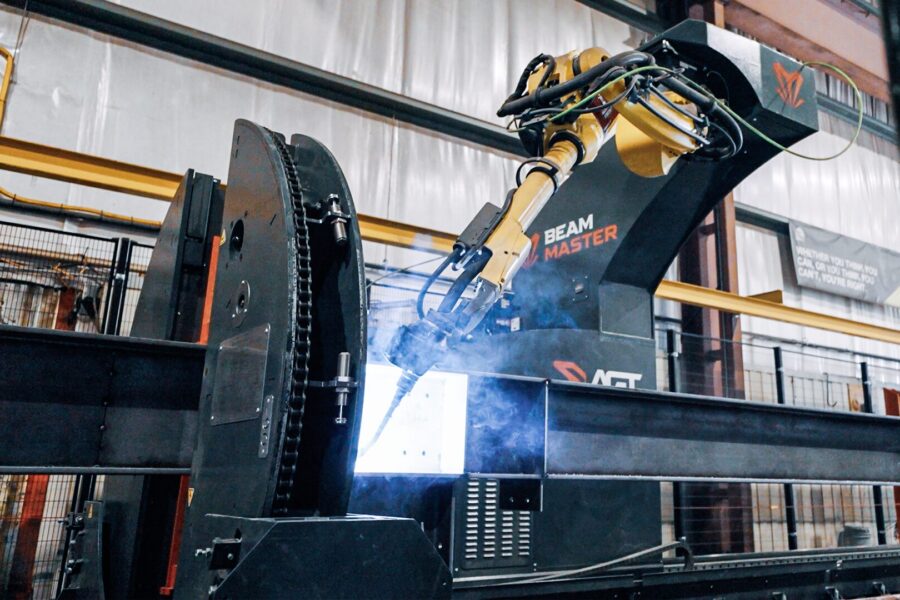
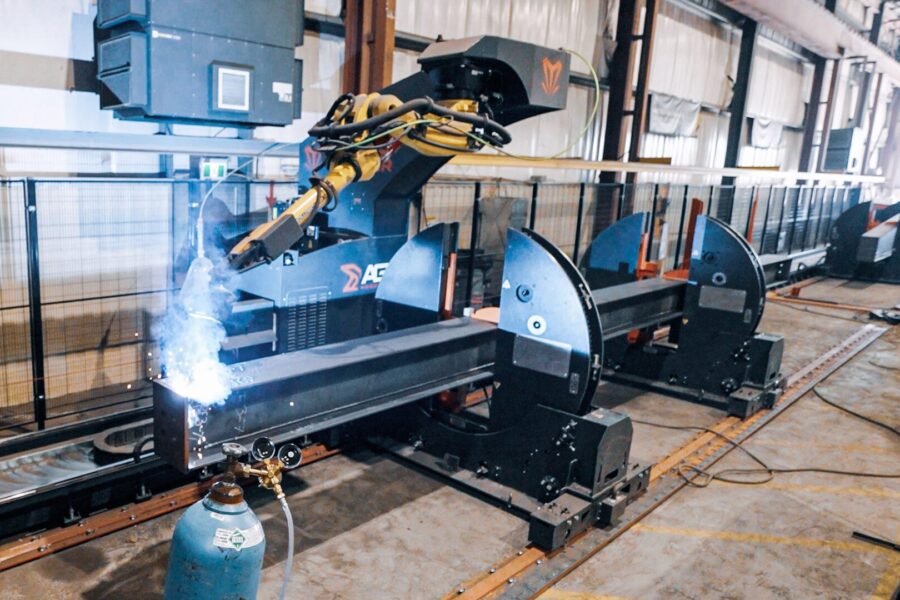
To improve workflow and eliminate bottlenecks, Canadian Metal Buildings implemented the BeamMaster robotic welding system.
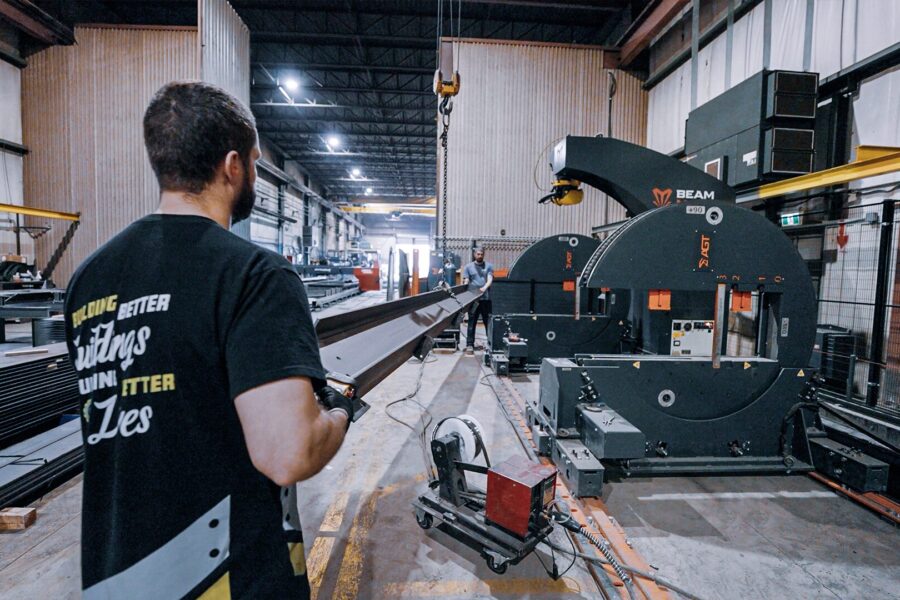
From a process perspective, the system integrates into the final stages of structural steel fabrication. Once components are cut and fitted, assemblies move directly into the robotic welding stage before proceeding to finishing operations such as painting.
Manufacturing Manager Dan Gallini explains the operational goal behind the decision.
“We wanted to streamline our operations by moving structural steel through a single robotic welding system.”
This approach allowed the company to centralize welding operations and create a more predictable production flow.
Higher Weld Quality
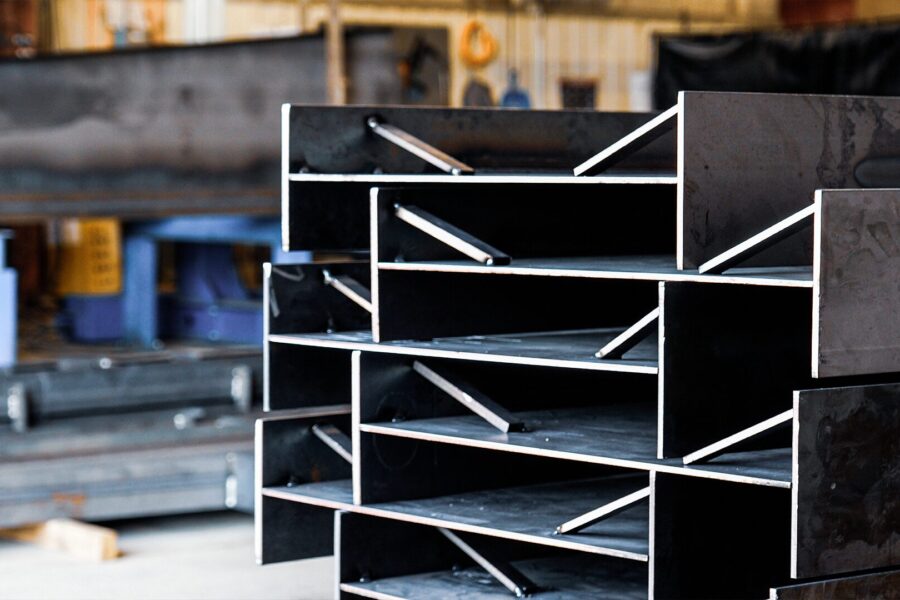
After implementing robotic welding, Canadian Metal Buildings observed improvements across several key areas. First, automation delivered a significant improvement in weld quality. Robotic welding provided consistent weld parameters and repeatable results, reducing variation and improving overall fabrication standards.
Increased Throughput
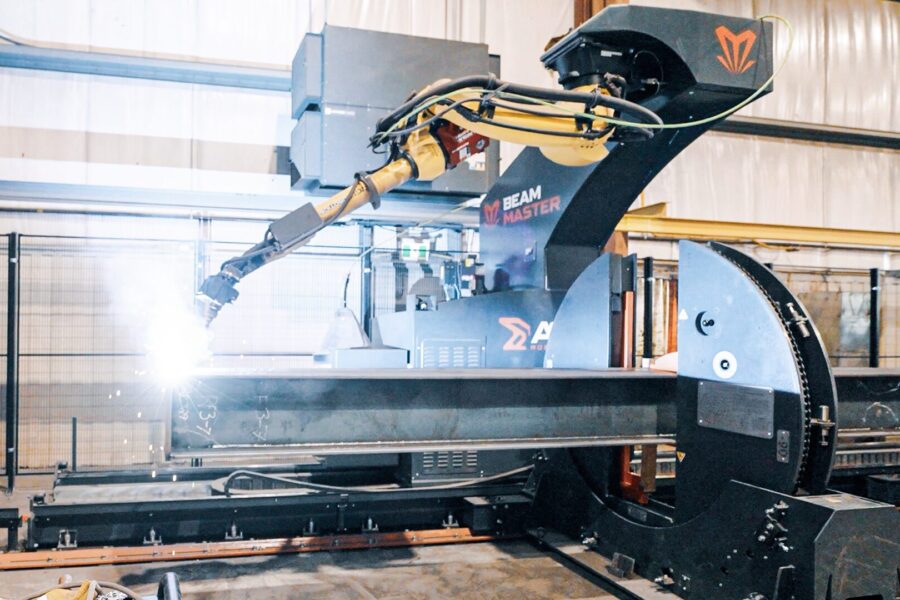
The company also experienced measurable gains in production throughput. By eliminating bottlenecks between fitters and welders, assemblies now move through the fabrication process more efficiently. This creates a smoother and more predictable production environment.
Stronger Workforce Engagement
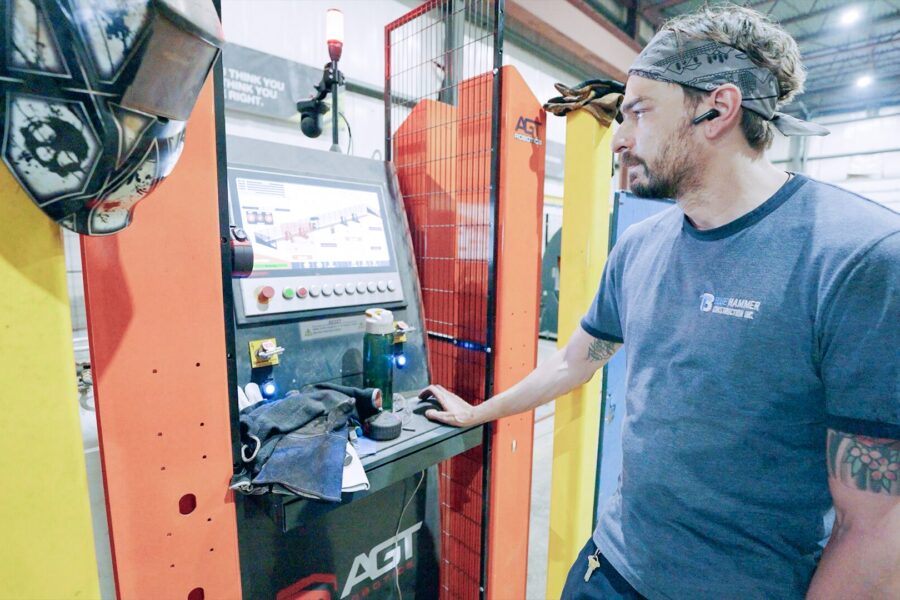
Importantly, the transition to automation did not replace employees. Instead, it elevated their roles. Operators now oversee automated welding processes rather than performing repetitive manual welding tasks. This shift improved job satisfaction and morale across the team.
Installation and Implementation Experience
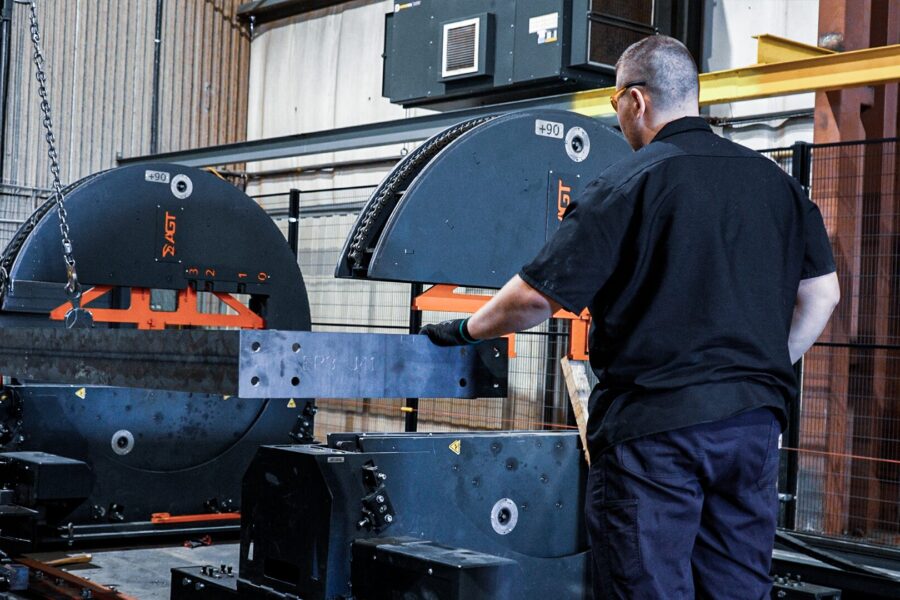
Another key factor in the success of the project was the installation process. Canadian Metal Buildings emphasized the collaborative nature of the deployment.
“The installation process was fantastic. The team worked closely with us and it was a great experience for everyone.”
From initial discussions through installation and support, the company reported positive communication with the AGT team.
Advice for Other Fabricators Considering Automation
For manufacturers evaluating robotic welding, Canadian Metal Buildings offers practical advice. Start by understanding your production needs, then evaluate how automation fits into your workflow.
Automation works best when it supports the production strategy of the shop. When implemented correctly, it becomes a tool for stabilizing operations and supporting long term growth.

Watch the Full Video Interview
Hear directly from Lucas Bruzzese and Dan Gallini as they discuss the challenges, implementation, and results of robotic welding at Canadian Metal Buildings.
Ready to Stabilize Your Welding Production?
Robotic welding is no longer limited to high volume manufacturing.
Today’s systems are designed to support fabricators looking to improve production flow, weld consistency, and workforce efficiency.
If your shop is experiencing bottlenecks between fitting and welding, it may be time to explore automation.
Learn how robotic welding can strengthen your production process.
Latest AGT News
Stay informed with our in-depth articles on the latest innovations and developments in the world of robotics and automation.