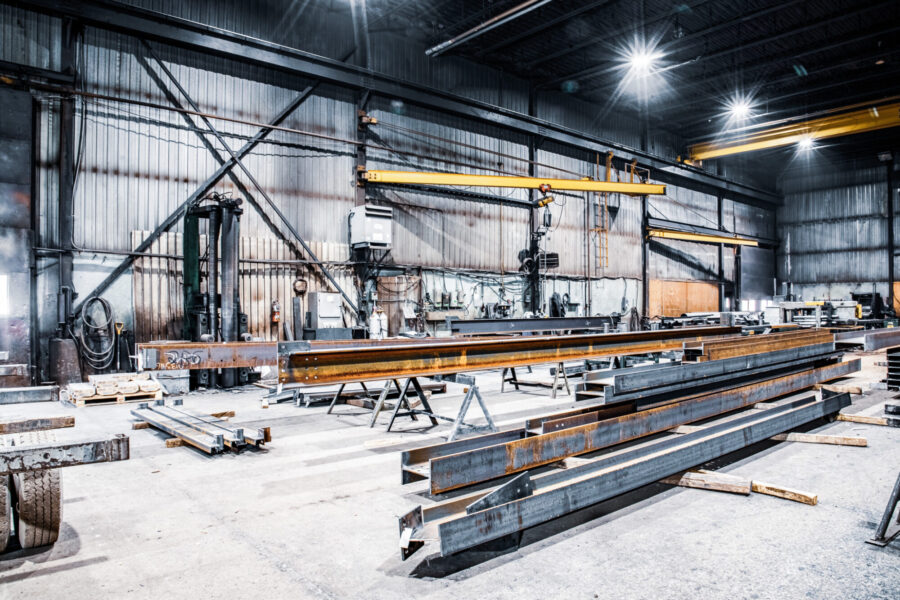
In structural steel fabrication, work changes constantly. Part sizes vary. Priorities shift. Labor availability changes. One day the shop is moving standard beams and columns. The next, it is handling more complex assemblies with stiffeners, tabs, end plates, or connection details. In other sectors, the same challenge shows up in trusses, trailers, and similar fabricated products. The result is the same: output and completion rates become harder to plan.
The strongest fabricators do not solve this by chasing speed alone. They look at welding as a control problem. They want predictable capacity. They want steady quality. They want a workflow that managers can rely on when workloads rise and projects change.
Where the bottleneck really starts in high-mix fabrication
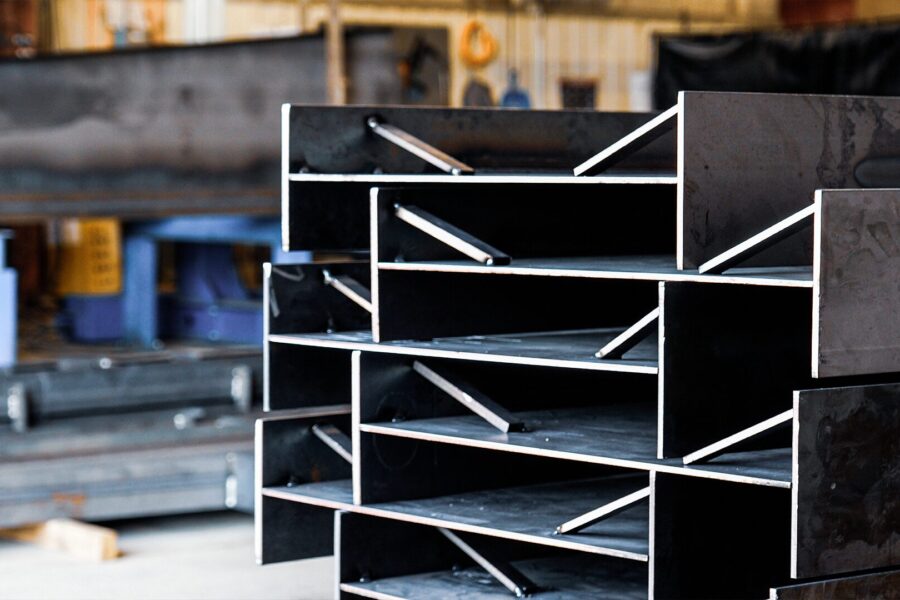
At first glance, many welded products look straightforward. A beam web and two flanges, for example, can be relatively predictable. Complexity usually appears when multiple accessories and connection details enter the picture.
As variability grows, predictability starts to shrink.
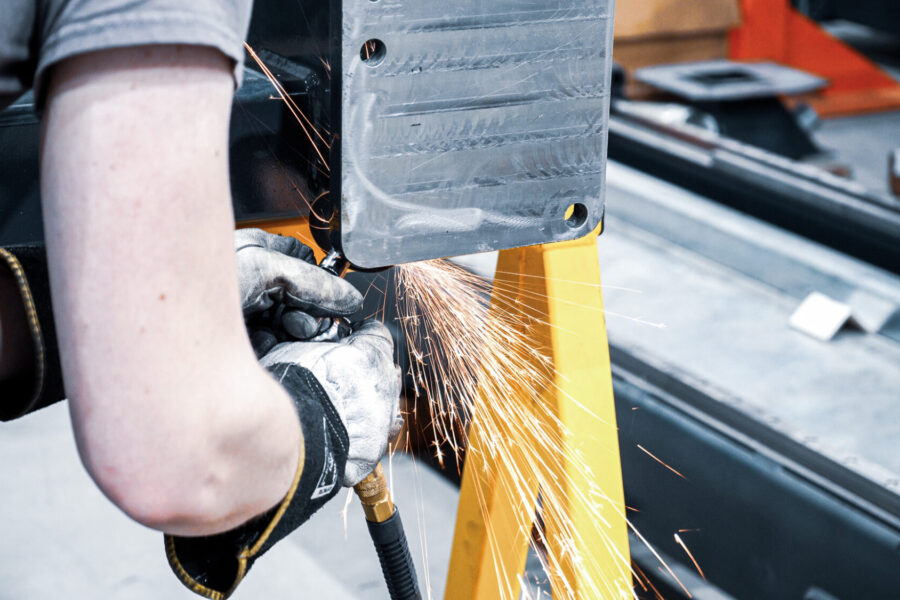
A part family may look similar from a distance, yet the welded features from one job to the next can change significantly. One beam may need very little secondary welding. The next may require a different mix of tabs, stiffeners, end plates, or attachments. In a high-mix fabrication environment, those differences accumulate quickly.
This is often where work starts to pile up. Fitting slows down. Welding slows down. Estimating becomes less reliable. Managers know the parts are moving, but they cannot say with confidence how long completion will actually take.
When that happens, welding is no longer just a process step. It becomes a source of uncertainty with a variable cost.
Why predictable capacity matters more than theoretical speed
High-performing fabricators think differently about capacity.
They are not only asking, “How fast can we weld?” They are asking, “How reliably can we complete this work, with this team, in this time frame?”
This question reflects real production conditions.
A shop that can predict welding time with confidence is in a stronger position to plan labor, schedule raw material more accurately, and bid work with less risk. It is also better positioned to absorb peak loads without creating downstream chaos in the production process.
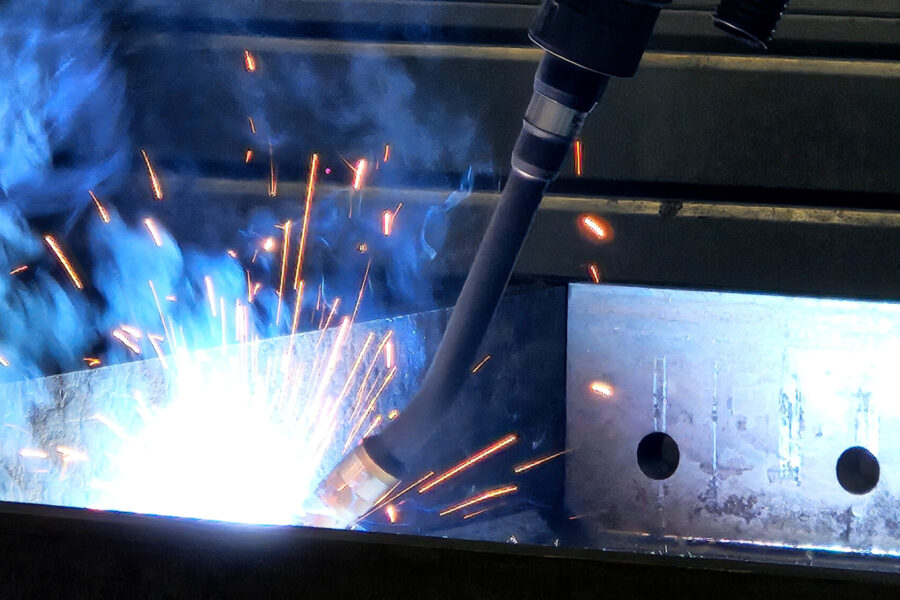
This is where robotic welding systems like BeamMaster create real value for high-mix fabrication operations. The advantage is not limited to welding speed. The real advantage comes from using the 3D model to turn repeatable welds into a more measurable, consistent, and easier-to-plan process. With CAD-to-Weld auto-programming, the shop can move from one unique beam to the next without creating a new programming burden on the floor or adding a new dependency on robot programmers.
In practical terms, that means more usable capacity. Not theoretical capacity. Real capacity that can be scheduled and trusted.
Consistency protects more than quality
Consistency is often treated as a quality issue. In production, it reaches much further than that.
In real high-mix production environments, inconsistency affects everything. It affects shift-to-shift output. It affects rework. It affects planning confidence. It affects how aggressively a shop can commit to deadlines.
When the welding process depends too heavily on manual labor and complex assemblies, results over time become harder to stabilize and predict. Some shifts outperform others. Some jobs move cleanly while others drag. Small deviations or errors create more grinding, more correction, and more pressure on the rest of the team.
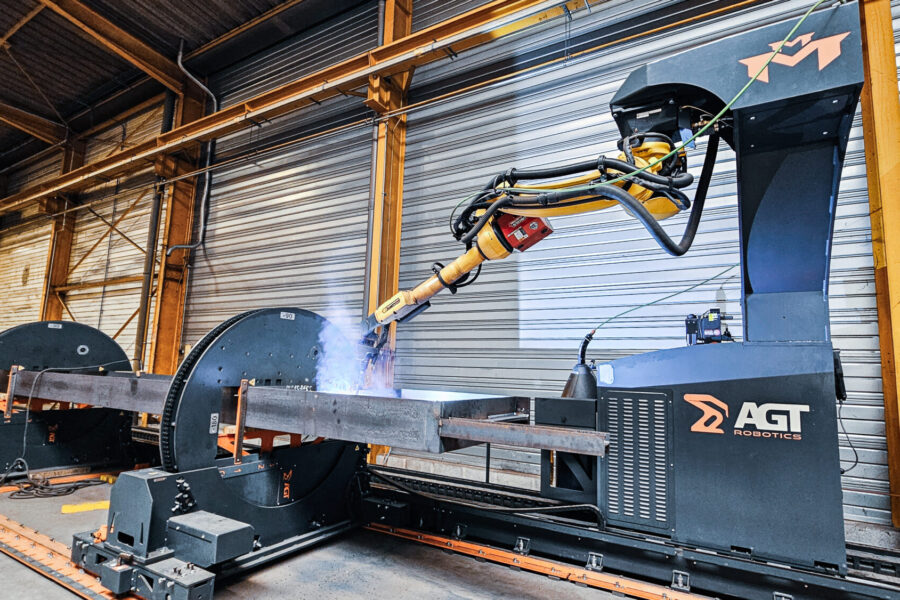
A robotic welding system like the one developed by AGT generates weld paths and parameters from the model, so repeatable welds can be produced with greater consistency across changing production. That helps reduce rework, stabilize output across shifts, and give managers a clearer view of what the shop can actually produce.
That protects quality, while also improving planning, strengthening delivery confidence, and making the whole operation easier to manage.
Control is what turns output into confidence
Control is the third piece, and it is often the most overlooked.
In a variable welding environment, many costs remain difficult to pin down. Time, wire usage, gas usage, rework, and labor demands can all feel like moving targets. The shop may have historical data, but each new project still carries a degree of uncertainty.
A more controlled welding process starts turning those variables into known factors.
That matters because better control improves more than production. It improves decision-making. When time to completion becomes clearer, planning becomes stronger. Costing becomes more reliable. Delivery promises become easier to make and easier to keep.
For high-performing fabricators, that level of control is a competitive advantage. It gives managers a process they can plan around, a schedule they can trust, and a stronger grip on cost as workloads change.
From Welding Constraint to Predictable Capacity
The lesson is simple.
In high-mix fabrication environments, welding doesn’t become a bottleneck only because there is too much work. It becomes a bottleneck when too much of the process remains variable.
The best fabricators reduce that variability where they can. They keep human judgment where it matters most. They make repeatable welding more measurable, more stable, and easier to plan.
That is how consistency, capacity, and control come together.
And that is how welding shifts from being a recurring constraint to becoming a source of predictable capacity.
At AGT, this is exactly how we think about robotic welding in high-mix production: not as a way to automate everything, but as a practical way to stabilize one of the most important parts of the workflow.
Latest AGT News
Stay informed with our in-depth articles on the latest innovations and developments in the world of robotics and automation.
-
19 June 2026 Testimonials
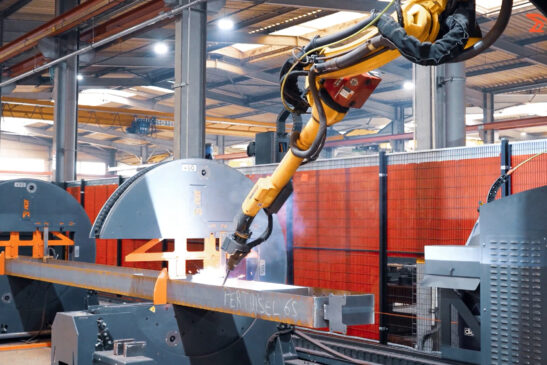
How SCAM increased weekly production without hiring more welders
Read more -

11 May 2026 Articles
The real cost of overwelding in structural steel fabrication
Read more -
7 May 2026 Events
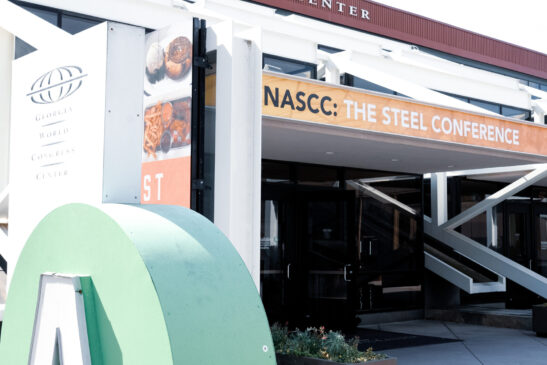
NASCC 2026 in Atlanta confirmed what we hear every week from structural steel fabricators.
Read more