What was holding SCAM back
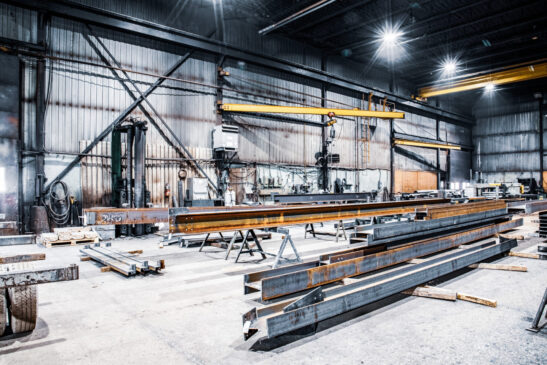
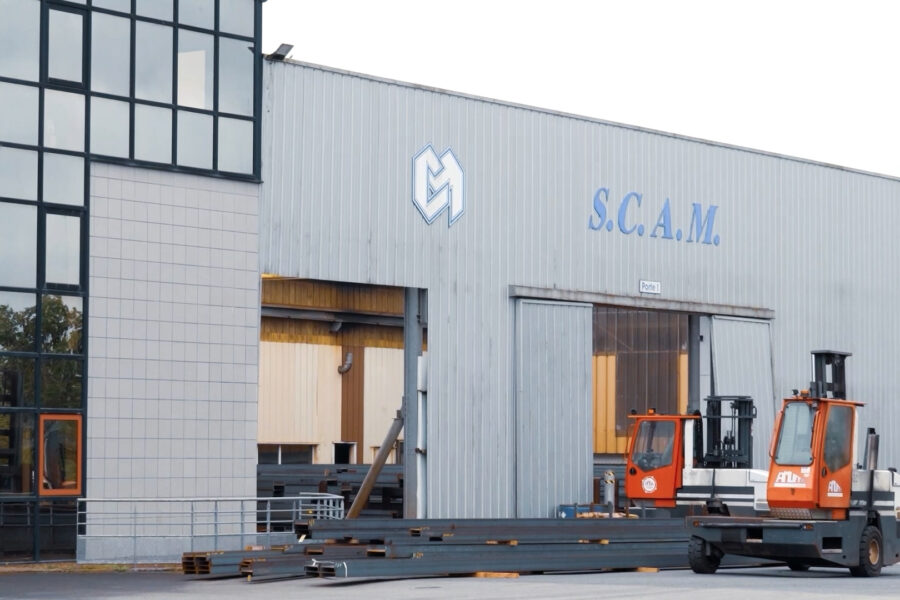
SCAM is a French family-owned business with more than three decades of experience fabricating steel structures for the agricultural and small industrial sectors. Like many shops of its kind, the company built its reputation on quality and reliability. And like many shops of its kind, it reached a point where quality alone could not raise output to the next level.
Before automation, SCAM faced a problem most fabricators recognize immediately. It could not find enough skilled welders. That one bottleneck capped how much the company could produce, and it made every ambitious target out of reach.
The pressure was worst on a specific kind of part. The pieces with the heaviest welding loads were monopolizing the human team and creating bottlenecks across the workshop.
“I wanted to be able to have some striking power on pieces that have a lot of welding that monopolized my welders and tended to clog up the workshop.” – Alexandre Le Rat, SCAM Director
When your toughest parts can only be run by your best welders, those few jobs consume the hours, and the rest of the shop waits behind them. SCAM needed more capacity exactly where the load was heaviest.
How SCAM approached automation
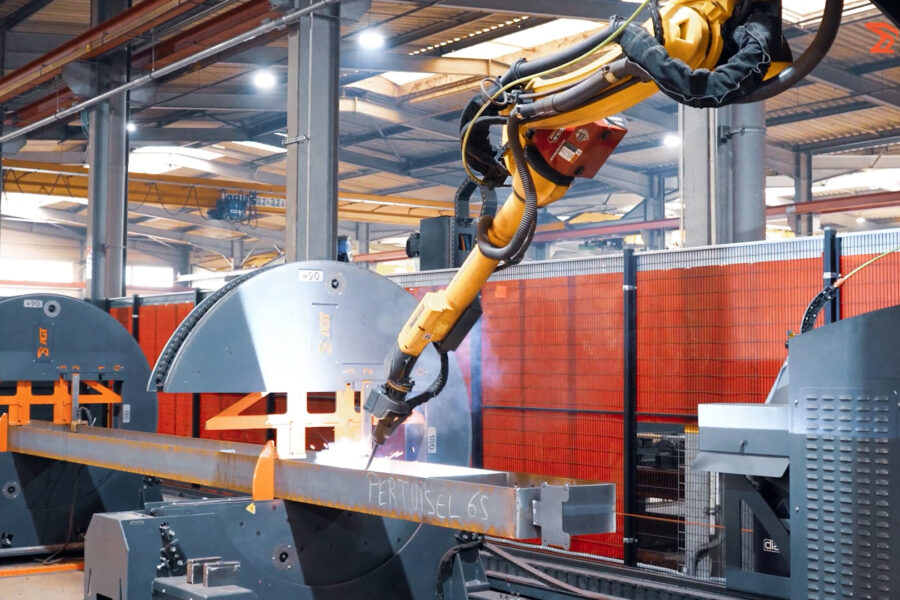
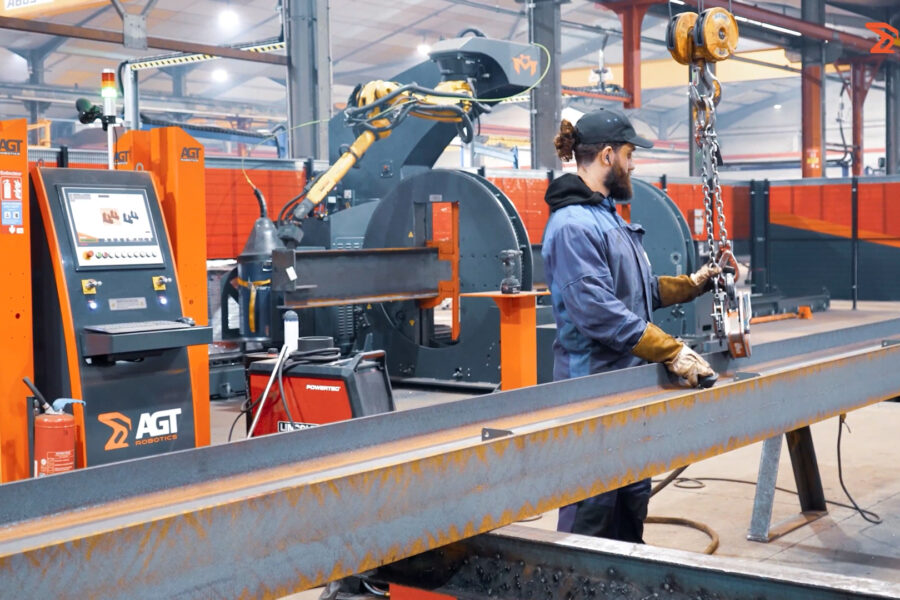
To take on the long, weld-intensive parts that were holding everything else up, SCAM integrated AGT’s BeamMaster robotic welding system. The goal was to support the skilled team and lift the heaviest welding load off their hands.
Rather than a wholesale change to how the shop worked, SCAM added automation exactly where it was needed. The robot took on the high-weld-density parts that consumed the most skilled hours, and the team kept the work that depends on human judgment. The two now run side by side.
Before committing, SCAM watched the cell run in a live production setting, which built confidence in both the technology and the AGT team standing behind it. Seeing the system handle real parts made the move feel like a measured step rather than a gamble.
A detail that surprised the team
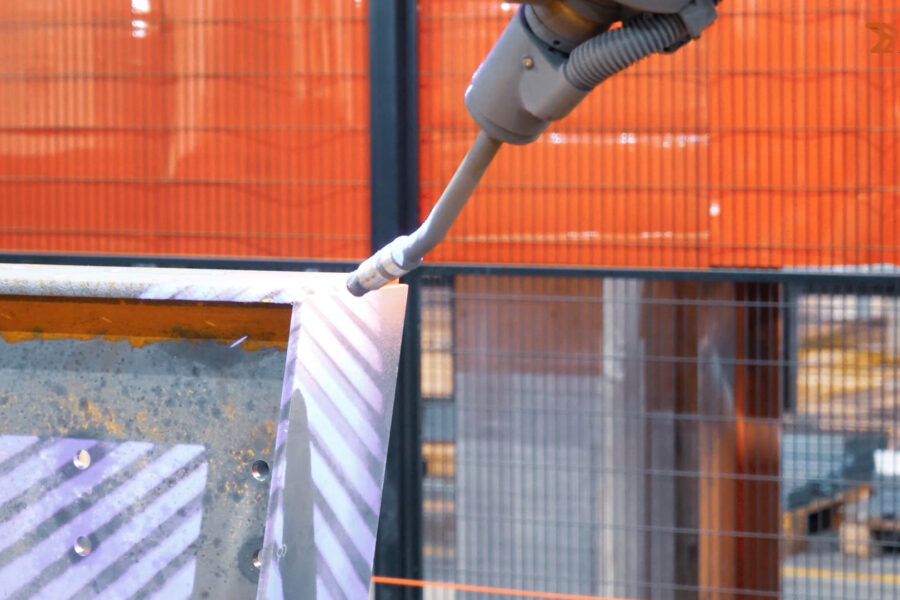
In a robotic cell, the robot spends time locating each joint before it can lay any metal. That sensing time is pure overhead, and it repeats on every weld. A standard laser sensor takes 12 to 16 seconds to locate a weld. SnapCam, the vision sensor developed by AGT, does it in 3 to 5 seconds.
“A laser would take between 12 to 16 seconds to sense a weld, now it’s 3 to 5 seconds. When the robot has 100 welds to perform, that is a huge time saver.” – Alexandre Le Rat, SCAM Director
Ten seconds per weld sounds small. On parts with hundreds of small welds, those seconds add up to lost capacity. Every second the robot is not searching is a second it spends welding.
“On the pieces where there is a lot of welding, we have 30 to 40% more production with the SnapCam.” – Alexandre Le Rat, SCAM Director
A new way to plan the floor
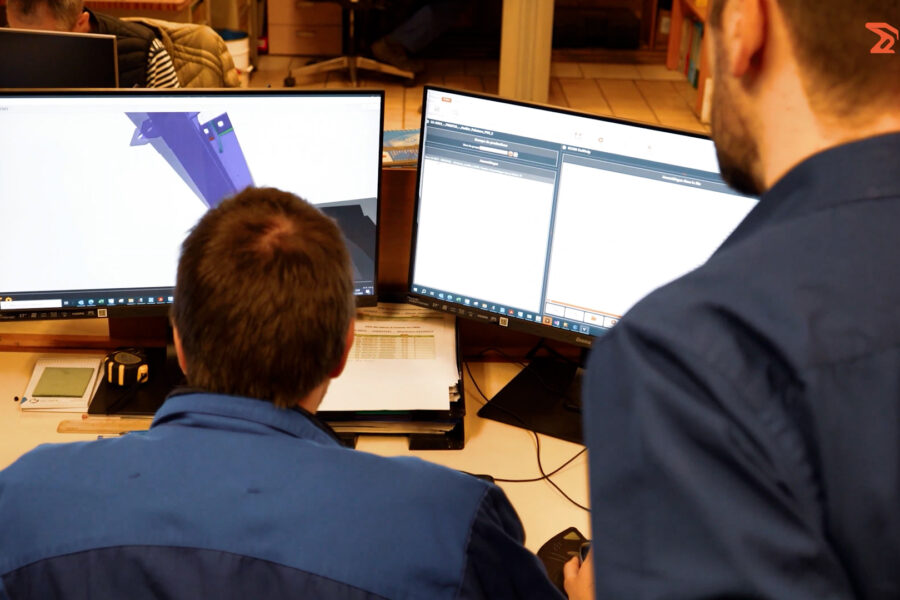
With Cortex, SCAM now simulates every part before it hits the floor. That lets the team decide which pieces belong on the robot using one clear metric, the ratio of welding time to handling time. Parts with a lot of welding and little handling are exactly where automation pays off, and that decision now happens on a screen before production starts.
This thinking has reshaped the company itself. SCAM has gone as far as redesigning its buildings to be more robot-ready and reorganizing its internal flow to get the most out of the machine. When a shop builds its workflow around the robot instead of fitting the robot into an old workflow, the gains compound.
The workforce shifted toward higher-value work
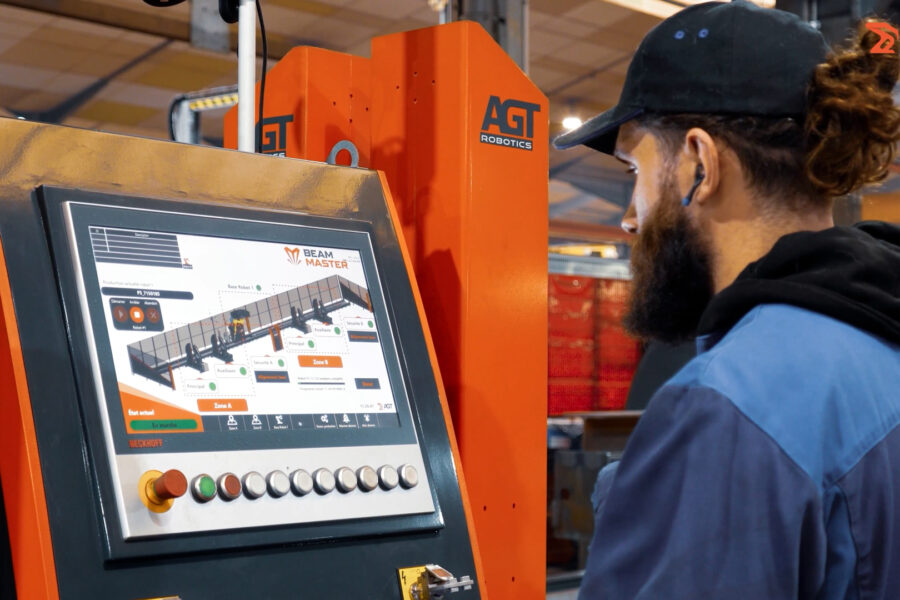
Machine operators now load a single large part that can take the robot up to four hours to weld, then move on to other tasks while the cell runs that job autonomously.
For a shop that could not hire its way out of a labor shortage, the robot became a reliable extra hand that is always available.
“It’s easy. I find it’s practical. When there’s a lack of welders, well, we have the robots which are always there.” – Danny Legoff, Robot Operator
That ease isn’t luck. It’s Cortex. Where complicated programming stalls a lot of robot installs, Cortex takes the complexity out. As soon as the cell was installed, the team found it straightforward to run day to day, and it’s kept running ever since.
From labor shortage to weekly record breaking
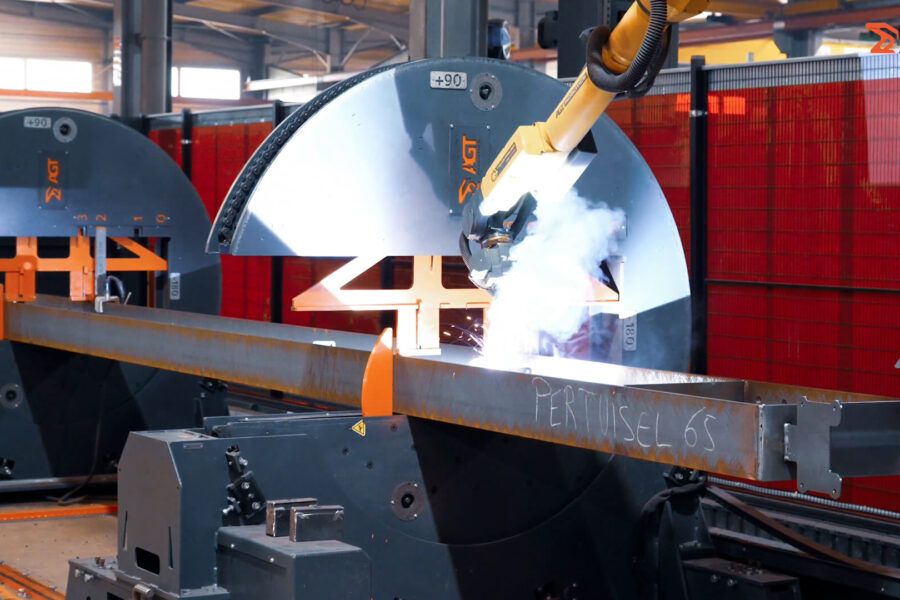
All of this shows up on the weekly production board. With the heaviest parts running on the robot, SCAM now posts tonnage it once considered out of reach, and it does so with the team it already had.
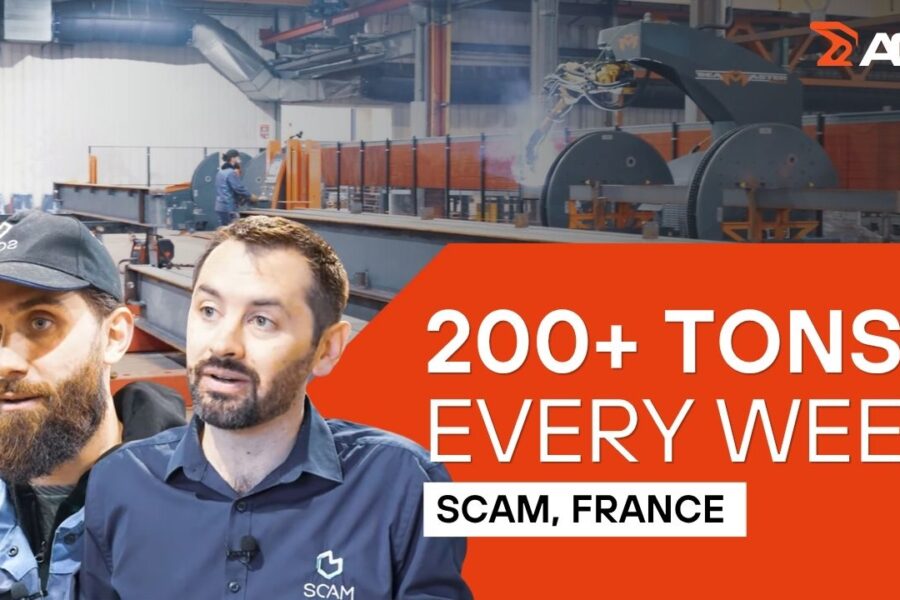
“We very regularly exceed 200 or even 220 tons per week, things that were completely unreachable just two years ago.”– Alexandre Le Rat, SCAM Director
Growth is now a decision SCAM gets to make, not a hiring problem it has to solve.
What changes when the bottleneck comes out?
SCAM’s results come from giving a skilled team more capacity on the parts that used to slow them down, plus the planning tools to decide exactly where that capacity belongs.
If “weld-intensive parts are blocking your flow, or the welders you need are hard to find, it may be worth seeing what changes when that bottleneck is gone
Learn how robotic welding can raise your production ceiling. Speak with an AGT expert today
Latest AGT News
Stay informed with our in-depth articles on the latest innovations and developments in the world of robotics and automation.